
High Performance Architecture for B2B SaaS Growth
High Performance Architecture for B2B SaaS GrowthBy Super Admin | January 05, 2026 | Cloud & Edge Computing

There’s a simple truth about scaling a SaaS business. Your architecture becomes your destiny. You can have the best product vision in the room, but if the platform cracks under pressure or grows slower than customer demand, the market moves on without hesitation. That’s why high-growth companies treat architecture as a strategic asset, not a technical afterthought.
This is where a well-designed B2B SaaS architecture becomes the engine that drives reliability, velocity, and long-term expansion. And as expectations rise around performance, global availability, and deep integrations, teams are leaning into architectures that don’t just support growth, but actively unlock it.
Let’s break down what that looks like in practice.
1. The Principles That Make SaaS Scale in the Real World
Every strong platform sits on a foundation of thoughtful SaaS architecture principles. These aren’t academic theories. They’re practical guardrails for building systems that stay stable even as usage patterns get messy.
The core ideas usually start with modularity, stateless services, clear boundaries, predictable API behavior, and observability baked in from day one. When these principles guide the structure, teams can ship faster, debug faster, and react to market demands without tearing the entire system apart.
This philosophical layer quietly shapes how a team builds the rest of its scalable SaaS architecture. Without it, performance tricks or infrastructure upgrades rarely deliver meaningful results.
2. Building for Scale Before You Actually Need It
Here’s the thing. Scaling doesn’t happen when you hit a traffic spike. It happens long before that, in decisions that feel deceptively small.
- How do you organize services?
- How do you store and shard data?
- How do you isolate workloads?
A resilient, scalable SaaS architecture uses horizontal growth as the default posture. Instead of desperately trying to add more power to a single service, the system spreads traffic, duplicates components when needed, and avoids bottlenecks at the design level.
Predictable growth patterns, tenant segmentation, and asynchronous processing all play a part. The teams that treat scale as an architectural mindset, not an emergency fix, are the ones that glide through sudden user surges instead of collapsing under them.
3. Why Multi-Tenancy Becomes the Growth Multiplier
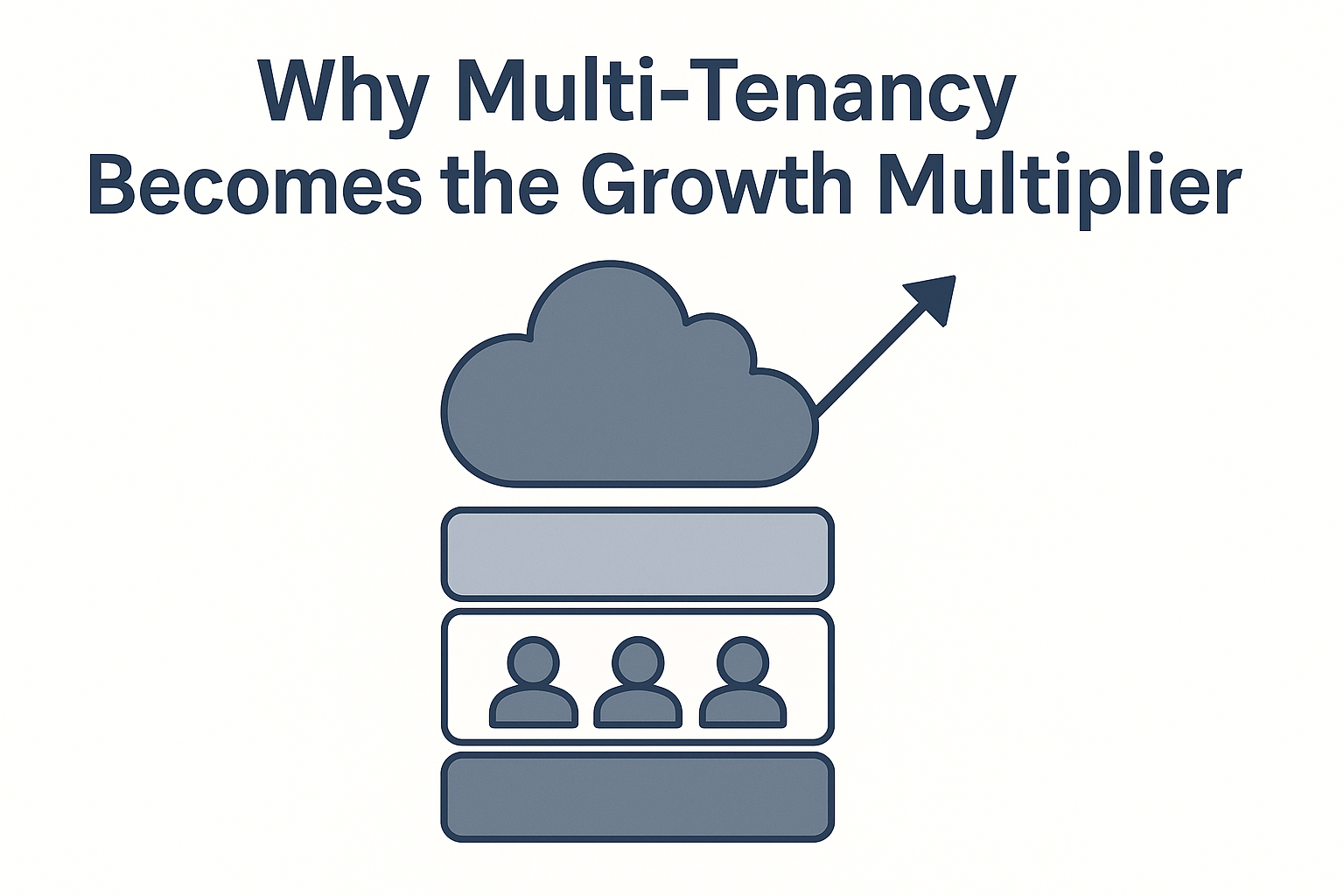
If there is one factor that separates enterprise-ready platforms from everyone else, it’s multi-tenancy. A strong multi-tenant SaaS architecture doesn’t merely pack multiple customers into one system. It does so while preserving isolation, performance fairness, and security guarantees.
There are a few common patterns that teams rely on:
- Shared schema: Shared database with tenant IDs
- Database per tenant: Strong isolation but heavier operational overhead
- Hybrid: Blends efficiency with control for high-value enterprise customers
The right model depends on the business, but the payoff is always the same. Lower infrastructure costs, simpler onboarding, consistent updates, and a platform that becomes easier to evolve. Multi-tenancy isn’t just technical efficiency. It is the architectural backbone of sustainable B2B SaaS growth.
4. Enterprise SaaS Architecture Design That Holds Up Under Pressure
Enterprise customers have no patience for downtime, sluggish response times, or fragile integrations. That’s why enterprise SaaS architecture design leans heavily on distributed systems thinking.
You see patterns like:
- Geo-replicated storage for low-latency access
- Multi-region compute for resilience
- Zero-trust identity flows
- Strict API contract governance
- Event-driven communication for predictable scaling
These decisions support global teams, complex workflows, and heavy automation demands. Once a platform grows into the enterprise segment, performance stops being a nice-to-have. It becomes the baseline expectation.
5. What High Performance SaaS Architecture Actually Looks Like
A high-performance SaaS architecture isn’t about throwing powerful servers at the problem. It’s about creating frictionless pathways for data and requests to move through the system.
The strongest architectures adopt a layered approach:
- Fast caching at the edge
- Drastically cuts latency for repeat queries.
- Streaming pipelines
- Prevents batch overload and supports real-time insights
- Optimized data models
- Reduces the cost of each read and write
- Intelligent autoscaling
- Brings new capacity online before customers feel the strain
Modern teams also rely on proactive observability: tracing, heat maps, anomaly detection, and predictive scaling. These aren’t luxuries. They’re the feedback loops that keep performance stable even in unpredictable conditions.
6. SaaS Architecture Best Practices That Actually Matter
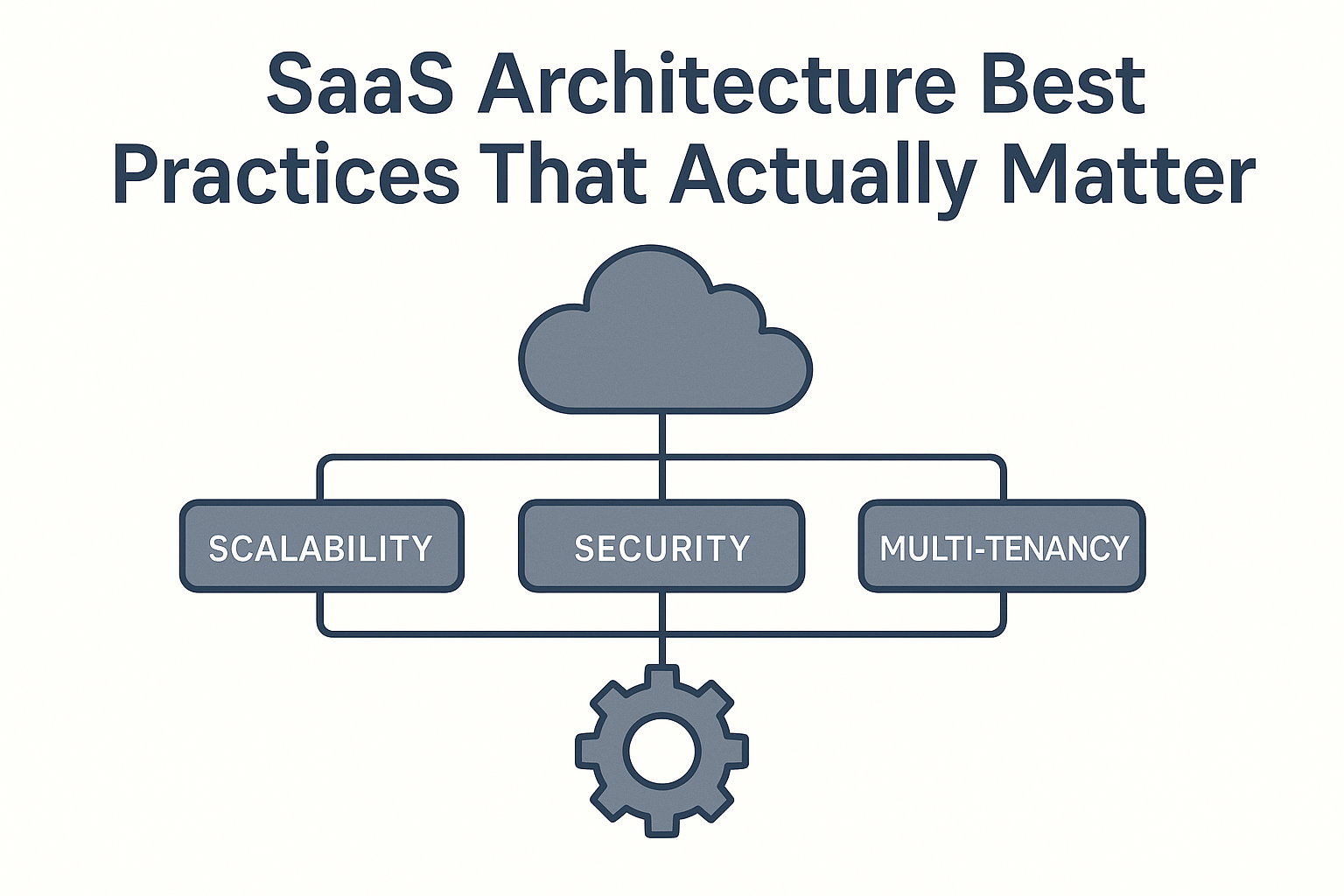
There’s no shortage of advice in this space, but a handful of SaaS architecture best practices consistently separate strong platforms from brittle ones.
Here are the practices that show up again and again in high-growth companies:
- Zero-downtime deployments
- Your customers should never even notice an update.
- Automated failover and recovery
- Systems heal themselves before humans get involved.
- Secure defaults
- Encryption, tokenization, audit trails, and access governance.
- Tenant-aware throttling
- No single customer should degrade the experience for everyone.
- Clear integration boundaries
- APIs must be predictable, stable, and versioned responsibly.
If a team consistently follows these practices, growth becomes a smoother climb instead of an architectural battle.
7. The Shift Toward Intelligent, Self-Evolving SaaS Systems
SaaS architecture has changed dramatically over the last decade. The industry moved from monoliths to microservices, then into event-driven and cloud-native models. The next wave is even more interesting.
- Systems are becoming adaptive.
- Workloads reroute themselves.
- Automations rewrite slow paths.
- Services scale before traffic spikes arrive.
This evolution is reshaping B2B SaaS architecture from something static into something alive. And the companies embracing this shift early are building platforms that don’t just perform today but are ready for whatever tomorrow demands.
8. Bringing It All Together: The Blueprint for SaaS Growth
A modern SaaS platform grows when its architecture quietly works in the background to support every customer, every workflow, and every spike in demand.
That blueprint looks like this:
- Use strong SaaS architecture principles as the foundation
- Adopt a scalable SaaS architecture built for horizontal expansion
- Invest in high-performance SaaS architecture patterns.
- Choose the right multi-tenant SaaS architecture model for your market
- Design with enterprise SaaS architecture expectations in mind
- Follow proven SaaS architecture best practices to stay stable under stress
This combination is what turns a promising platform into a market leader. Growth isn’t luck. Its architecture is expressed over time.





Related Blogs


Let us digitalize your ideas.
Contact Us